Sunday, May 31, 2020

Colton Herzog


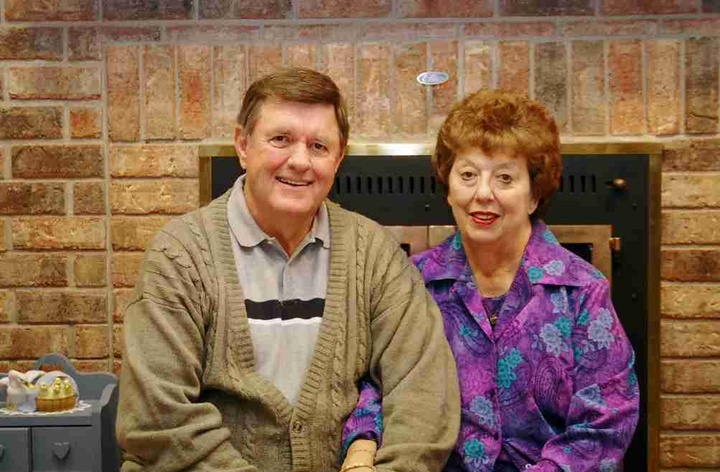
We would like to congratulate Colton Herzog, son of Mindy and Eric Herzog, (our grand-nephew) on his graduation from Boise State University. He will be going on to get his doctorate in Oklahoma.

Saturday, February 1, 2020

Inkom Cowboys

The original Inkom School housed grades 1 through 12, until 1955, when the Marsh Valley School District was created and the high school was moved to Arimo. This photo is the cover of the 1946 School Annual.


The following picture is Inkom 1st Grade with my sister, Joyce Helmandollar.


The next picture is Inkom 5th and 6th Grades with my brother, Ronald Helmandollar.


Friday, January 24, 2020

Joyce Stephenson and Great Grandson Cannon


My sister, Joyce Stephenson, with her Great Grandson, Cannon Hollenbeck.

Earl Carlson

Here are a few pictures provided by my cousin, Joe Carlson. Thanx, Joe.

Nothing on this blog is copyright protected. Feel free to copy, save, and share with other family members. If you have pictures, biographies, family histories, etc. that you wish to share, please email as an attachment to kccolaianni@gmail.com. I will try to get them posted as soon as I can to the blog-o-sphere.

Melba and Joe Carlson

Center: Isabel Carlson
Left to Right: Leslie Carlson Stoddard, Teresa Carlson Merica, 
Joe Carlson, Ray Carlson, and Rod Carlson

Isabel and Earl Carlson
(Taken at the Cabin up Inman Creek, East of Inkom. There was a sheep camp under this tree 
that the kids would sleep in when staying overnight.)


Isabel and Earl Carlson


Thursday, January 9, 2020

Foltz Family 2019


Center: Tom and Leslie Foltz; Left: Mason Foltz; Right: Hayden Foltz, 2019, Jackson Hole, Wyoming.

Leslie is my niece, my sister's second daughter, Herman & Wilma Helmandollar's Granddaughter.

Wednesday, January 8, 2020

Ralph and Roy Helmandollar, 1917, Oxford, Idaho.


I went down that rabbit hole called Ancestry. This is a picture of my father's younger brothers, Ralph (older) and Roy (baby) taken in 1917. I thought it was very cute.

Friday, October 18, 2019

New Addition


We have a new addition to the family. Cannon Hollenbeck, son of Colleen Stephenson and Ryan Hollenbeck.

Saturday, September 7, 2019

Sunday, August 4, 2019

Jackie Harris Helmandollar


This is my sister-in-law. I was only 4 years old when she and my brother were married.Consequently, my nieces are only a few years younger than me. When Jackie went to work at Farmer's Insurance, my mother and father were took care of Lisa, Jennifer, and Susan and they became like my sisters because we were so close in age. I have a wonderful family.

Saturday, July 6, 2019

Live Strong. Live Fearless.

After every excursion to a hospital with life threatening illness, I come away with this thought:


Wednesday, June 19, 2019

Christmas 1953 Swan Lake, Idaho

This video was provided by Joe Carlson and given to me by Theresa Carlson Merica. The video shows Grandpa and Grandma Carlson, Red and Ruth Lamoreaux and son, David, Wilma and Herman Helmandollar and daughter, Sue, Coral and Irvin Scott and daughter, Christi, Swede and Wanda Carlson. Enjoy


Sunday, June 16, 2019

¿Cómo se llama?

In Spanish, this is the familiar form of asking someone: What are you called? The formal form is ¿Cuál es su nombre? Meaning what is your given name. For someone having the formal name of William, they are most likely called Bill. I have been thinking about names for some time now because of my interest in genealogy. How people are known or called is not always by their given name.

As an example, I was searching for records regarding my great-grandmother, Mary Cordelia Henderson. That was the name on her birth and baptismal records. However, Ancestry.com left me a leaf hint and upon viewing said hint, the record was for a Delia Carlson. “Is this the same person?” the website asked.

I was unsure, so I went further down the rabbit hole. The birth date and birth place were the same. Her parents were the same as for Mary Cordelia.  Then, it struck me, she was called Delia and when she married, she became Delia Carlson. Tracing her now became a lot easier because I knew what she was called.

In Romeo and Juliet, Shakespeare asked: What's in a name?

Romeo Montague and Juliet Capulet meet and fall in love. They are doomed from the start as members of two warring families. Juliet tells Romeo that a name is an artificial and meaningless convention, and that she loves the person who is called "Montague."

My grandparents gave all of their children the middle initial C, which stood for Croshaw, Grandma’s maiden name. My mother named her first son, Ronald C Helmandollar, to continue the tradition, only the C stood for Carlson. She did not keep that tradition with the remainder of her children however.
Mother named her second daughter, Laura Sue Helmandollar, after her mother, Laura. My sister didn’t like her first name, so she went by Sue Helmandollar. After she was married, she became Sue Wright.

Names are a funny thing. You believe them to be permanent markers of people and places, but even “old New York was once New Amsterdam. Why they changed it, I can’t say. I guess they just liked it better that way.”

My father, Herman Joseph Helmandollar, was called Herman. Some of the men he worked with called him Herm and some called him Hermandollar, which always made me laugh for some reason.

                                                                      Notice the name Kim embroidered on my sweater.
My husband, Gino’s given name is EuGene Albert Colaianni, after his two uncles who died during World War II. His family called him Genie or Gene. I called him Gino because it was more Italian and it stuck. When we were married, I had my given name changed to Kim Helmandollar Colaianni. Gino called me KC (casey) because those were now my initials. Most people who have known me for a long time still call me Kim because that is how they have always known me. That’s just fine by me. It is my legal given name.

Why I changed it,
I won’t say,
I guess I just like it better that way.


by KC Colaianni

Saturday, March 16, 2019

Amazing, just found this online. This is the railroad depot where I went to work at my very first job at age 19, as a Stenographer. It was a job women were not allowed to do because of travel with the men on their private business cars.


Sunday, December 30, 2018

Major Change


On June 29, 1956, President Dwight Eisenhower signed the Federal-Aid Highway Act of 1956. The bill created a 41,000-mile “National System of Interstate and Defense Highways” that would, according to Eisenhower, eliminate unsafe roads, inefficient routes, traffic jams and all of the other things that got in the way of “speedy, safe transcontinental travel.” At the same time, highway advocates argued, “in case of atomic attack on our key cities, the road net [would] permit quick evacuation of target areas.” For all of these reasons, the 1956 law declared that the construction of an elaborate expressway system was “essential to the national interest.”


Little did my family know that this would be a major change in our lives. The rumors were flying around our small village of Inkom, Idaho in 1960 when the surveyors began plotting the route that the Interstate 15 would take through our village of 380 citizens.


Everyone was quite surprised however, when the route chosen went through the east side, splitting the town in two. There was only one engineering hurdle standing in the way of construction - a wall of basaltic lava 400 ft. or so high. The road bed would be cut through this monolith at its tip above Stuart's Dairy Farm, dividing the lava flow, and leaving a monument on the western end, as seen below.


The work took months of blasting with dynamite and heavy equipment to haul away the chunks of basalt to be used for the road bed which would be elevated most of the way through Portneuf Gap.


You can see (above) how the construction proceeded into 1963. This photo was taken by Lena Sexton from the Sorrell Creek dugway. Our family house can be seen on the left, at the base of the road bed. Construction took our barn, pasture, and corrals. The Feds paid my father for the land prior to construction and with that money, he and my brother purchased acreage further up Rapid Creek Road.


I was only 7 years old when the blasting and construction began in 1961. Every afternoon, except Sundays, at 4:00 p.m. the sirens would sound alarm. Homes close to the detonation area would open windows and doors to keep the shock-waves from the blast from blowing out said doors and windows. Then the belly-dumps would move in working night and day to clear the rock.


By 1964, my father had sold our house and we moved a mile up the road. The new house was a major change for our family as we all ended up living on Helmandollar Drive.

Sunday, December 16, 2018

St. Anthony's Hospital


I was born at St. Anthony's Hospital on August 3, 1954. My mother reported that the Sisters took very good care of her.

Saturday, October 20, 2018

Little House Oh So Dreary

This is the house that my father built. We lived there until Interstate 15 was blasted through that gap in lava rocks in 1961. The government bought that biggest share of the property for the elevated highway behind our house, taking out our barn, outbuildings, pasture, and corals. After that, the property had no value for my father and he built us a new up almost a mile east of there.


Saturday, February 24, 2018

The Second Amendment Was Ratified to Preserve Slavery


After the Sale: Slaves Going South from Richmond by Eyre Crowe, 1853 (Now hanging in the Chicago History Museum)

The real reason the Second Amendment was ratified, and why it says “State” instead of “Country” (the Framers knew the difference – see the 10th Amendment), was to preserve the slave patrol militias in the southern states, which was necessary to get Virginia’s vote.  Founders Patrick Henry, George Mason, and James Madison were totally clear on that . . . and we all should be too.
In the beginning, there were the militias. In the South, they were also called the “slave patrols,” and they were regulated by the states.
In Georgia, for example, a generation before the American Revolution, laws were passed in 1755 and 1757 that required all plantation owners or their male white employees to be members of the Georgia Militia, and for those armed militia members to make monthly inspections of the quarters of all slaves in the state.  The law defined which counties had which armed militias and even required armed militia members to keep a keen eye out for slaves who may be planning uprisings.
As Dr. Carl T. Bogus wrote for the University of California Law Review in 1998, “The Georgia statutes required patrols, under the direction of commissioned militia officers, to examine every plantation each month and authorized them to search ‘all Negro Houses for offensive Weapons and Ammunition’ and to apprehend and give twenty lashes to any slave found outside plantation grounds.”

It’s the answer to the question raised by the character played by Leonardo DiCaprio in Django Unchained when he asks, “Why don’t they just rise up and kill the whites?”  If the movie were real, it would have been a purely rhetorical question, because every southerner of the era knew the simple answer: Well regulated militias kept the slaves in chains.
Sally E. Haden, in her book Slave Patrols: Law and Violence in Virginia and the Carolinas, notes that, “Although eligibility for the Militia seemed all-encompassing, not every middle-aged white male Virginian or Carolinian became a slave patroller.” There were exemptions so “men in critical professions” like judges, legislators and students could stay at their work.  Generally, though, she documents how most southern men between ages 18 and 45 – including physicians and ministers – had to serve on slave patrol in the militia at one time or another in their lives.
And slave rebellions were keeping the slave patrols busy.
By the time the Constitution was ratified, hundreds of substantial slave uprisings had occurred across the South.  Blacks outnumbered whites in large areas, and the state militias were used to both prevent and to put down slave uprisings.  As Dr. Bogus points out, slavery can only exist in the context of a police state, and the enforcement of that police state was the explicit job of the militias.
If the anti-slavery folks in the North had figured out a way to disband – or even move out of the state – those southern militias, the police state of the South would collapse.  And, similarly, if the North were to invite into military service the slaves of the South, then they could be emancipated, which would collapse the institution of slavery, and the southern economic and social systems, altogether.
These two possibilities worried southerners like James Monroe, George Mason (who owned over 300 slaves) and the southern Christian evangelical, Patrick Henry (who opposed slavery on principle, but also opposed freeing slaves).
Their main concern was that Article 1, Section 8 of the newly-proposed Constitution, which gave the federal government the power to raise and supervise a militia, could also allow that federal militia to subsume their state militias and change them from slavery-enforcing institutions into something that could even, one day, free the slaves.
This was not an imagined threat.  Famously, 12 years earlier, during the lead-up to the Revolutionary War, Lord Dunsmore offered freedom to slaves who could escape and join his forces.  “Liberty to Slaves” was stitched onto their jacket pocket flaps.  During the War, British General Henry Clinton extended the practice in 1779.  And numerous freed slaves served in General Washington’s army.
Thus, southern legislators and plantation owners lived not just in fear of their own slaves rebelling, but also in fear that their slaves could be emancipated through military service.
At the ratifying convention in Virginia in 1788, Henry laid it out:
“Let me here call your attention to that part [Article 1, Section 8 of the proposed Constitution] which gives the Congress power to provide for organizing, arming, and disciplining the militia, and for governing such part of them as may be employed in the service of the United States.
“By this, sir, you see that their control over our last and best defence is unlimited. If they neglect or refuse to discipline or arm our militia, they will be useless: the states can do neither . . . this power being exclusively given to Congress. The power of appointing officers over men not disciplined or armed is ridiculous; so that this pretended little remains of power left to the states may, at the pleasure of Congress, be rendered nugatory.”
George Mason expressed a similar fear:
“The militia may be here destroyed by that method which has been practised in other parts of the world before; that is, by rendering them useless, by disarming them. Under various pretences, Congress may neglect to provide for arming and disciplining the militia; and the state governments cannot do it, for Congress has an exclusive right to arm them [under this proposed Constitution] . . . “
Henry then bluntly laid it out:
“If the country be invaded, a state may go to war, but cannot suppress [slave] insurrections [under this new Constitution]. If there should happen an insurrection of slaves, the country cannot be said to be invaded. They cannot, therefore, suppress it without the interposition of Congress . . .. Congress, and Congress only [under this new Constitution], can call forth the militia.”
And why was that such a concern for Patrick Henry?
“In this state,” he said, “there are two hundred and thirty-six thousand blacks, and there are many in several other states. But there are few or none in the Northern States. . .. May Congress not say, that every black man must fight? Did we not see a little of this last war? We were not so hard pushed as to make emancipation general; but acts of Assembly passed that every slave who would go to the army should be free.”
Patrick Henry was also convinced that the power over the various state militias given the federal government in the new Constitution could be used to strip the slave states of their slave-patrol militias.  He knew the majority attitude in the North opposed slavery, and he worried they’d use the Constitution to free the South’s slaves (a process then called “Manumission”).
The abolitionists would, he was certain, use that power (and, ironically, this is pretty much what Abraham Lincoln ended up doing):
“[T]hey will search that paper [the Constitution], and see if they have power of manumission,” said Henry.  “And have they not, sir? Have they not power to provide for the general defence and welfare? May they not think that these call for the abolition of slavery? May they not pronounce all slaves free, and will they not be warranted by that power?
“This is no ambiguous implication or logical deduction. The paper speaks to the point: they have the power in clear, unequivocal terms, and will clearly and certainly exercise it.”
He added: “This is a local matter, and I can see no propriety in subjecting it to Congress.”
James Madison, the “Father of the Constitution” and a slaveholder himself, basically called Patrick Henry paranoid.
“I was struck with surprise,” Madison said, “when I heard him express himself alarmed with respect to the emancipation of slaves. . . . There is no power to warrant it, in that paper [the Constitution]. If there be, I know it not.”
But the southern fears wouldn’t go away.
Patrick Henry even argued that southerner’s “property” (slaves) would be lost under the new Constitution, and the resulting slave uprising would be less than peaceful or tranquil:
“In this situation,” Henry said to Madison, “I see a great deal of the property of the people of Virginia in jeopardy, and their peace and tranquility gone.”
So Madison, who had (at Jefferson’s insistence) already begun to prepare proposed amendments to the Constitution, changed his first draft of one that addressed the militia issue to make sure it was unambiguous that the southern states could maintain their slave patrol militias.
His first draft for what became the Second Amendment had said: “The right of the people to keep and bear arms shall not be infringed; a well armed, and well regulated militia being the best security of a free country [emphasis mine]: but no person religiously scrupulous of bearing arms, shall be compelled to render military service in person.”
But Henry, Mason and others wanted southern states to preserve their slave-patrol militias independent of the federal government.  So, Madison changed the word “country” to the word “state,” and redrafted the Second Amendment into today’s form:
“A well-regulated Militia, being necessary to the security of a free State, the right of the people to keep and bear Arms, shall not be infringed.”
Little did Madison realize that one day in the future weapons-manufacturing corporations, newly defined as “persons” by a Supreme Court some have called dysfunctional, would use his slave patrol militia amendment to protect their “right” to manufacture and sell assault weapons used to murder schoolchildren.


FlipboardFacebook


Friday, May 12, 2017

Decoration Day

By KC Colaianni

Decoration Day was borne out of the Civil War and a desire to honor our dead. It was officially proclaimed on May 5,1868 by General John Logan, national commander of the Grand Army of the Republic, in his General Order No. 1. “The 30th of May, 1868, is designated for the purpose of strewing with flowers, or otherwise decorating the graves of comrades who died in defense of their country during the late rebellion, and whose bodies now lie in almost every city, village and hamlet churchyard in the land,” he proclaimed. The date of Decoration Day, as he called it, was chosen because it wasn’t the anniversary of any particular battle.
On the first Decoration Day, General James Garfield made a speech at Arlington National Cemetery, and 5,000 participants decorated the graves of the 20,000 Union and Confederate soldiers buried there.

The first state to officially recognize the holiday was New York in 1873. By 1890, it was recognized by all of the northern states. The old confederacy refused to acknowledge the day, honoring their dad on separate days until after World War I, when the holiday changed from honoring just those who died fighting in the Civil War to honoring Americans who died fighting in any war.

Saturday, April 22, 2017

Kay Dean Royter


Did you know that we have a Vegas Showgirl in the family?


The following video clip is from circa 1953 Las Vegas, where she did choreography for the Horace Heidt TV Shows.  During this particular performance, Kay Dean was on stage with Sammy Davis, Jr.


No sound. Kay Dean is in the black costume.

Video provided by Kay Dean's daughter, Mansary Blue-Pony.


Kay Dean Royter was also Miss Pocatello 1955.


Mansary Blue-Pony is a very talented singer/performer/artist in her own right in Tempe, Arizona.


We do have smart, talented, and beautiful women in our family.